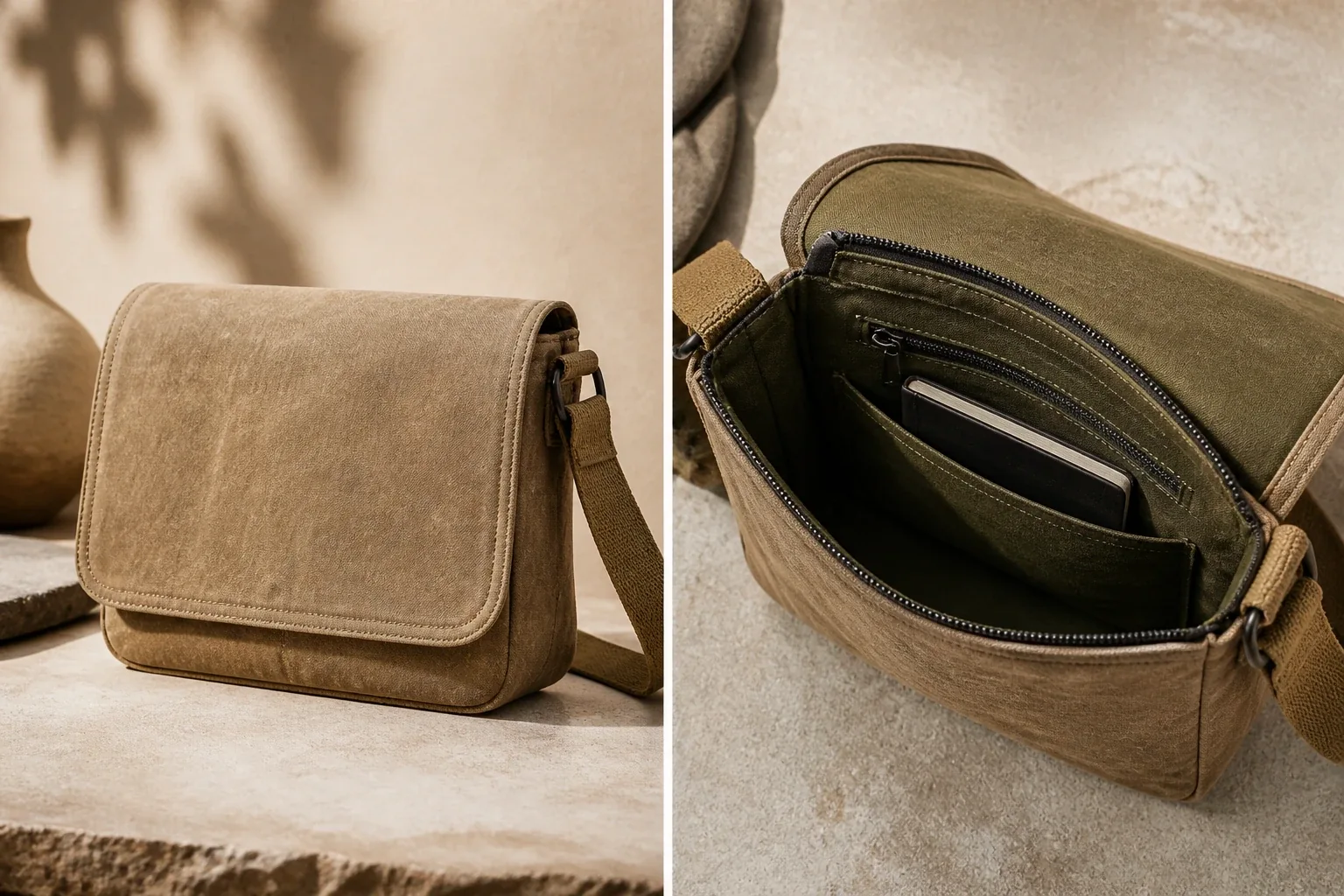
Photograph a bag's interior pockets, zipper and usable space
Use a closed front view for shape and an open overhead view for pocket access. Measure the opening and inside width before demonstrating capacity with an object of known size.
Establish orientation
Keep the hardware facing the same way. Move the strap outside the opening and open the bag as a customer would. Photograph empty pockets and then insert the notebook in one pocket without changing the camera. This keeps two views from looking like two compartments.
Explain usable capacity
Measure outside width, clear opening and pocket depth separately. Identify the endpoints beside the photo. A phone-shaped prop is insufficient evidence that every model fits. Edit the setting around the bag and retain the actual seam and zipper photos as evidence.
Starting materials
Gather the actual SKU, a flexible measuring tape and a notebook with known dimensions. Photograph the empty bag first.
Example prompt
Place the closed view beside the overhead interior photograph. Keep the real pocket count, zipper position and lining color. Match the backgrounds and give the opening room.
What to check
Pack the notebook and close the zipper. Record its dimensions and the narrowest clear opening. Describe separately whether an item fits and whether the bag closes around it.