
Show product scale with a prop, a dimension line or a size table?
HaivisUpdated
A prop helps someone imagine scale. A dimension line names the endpoints. A table compares models. Choose the evidence that answers the buyer's actual sizing question.
What each form of evidence tells you
| Method | Buyer question | Setup |
|---|---|---|
| Prop on the same plane | How big does it feel? | Keep object and prop similarly distant |
| Dimension line | Which length is measured? | Mark both endpoints and the unit |
| Model table | Which size works? | Keep conventions consistent across a column |
Work through a bag-opening example
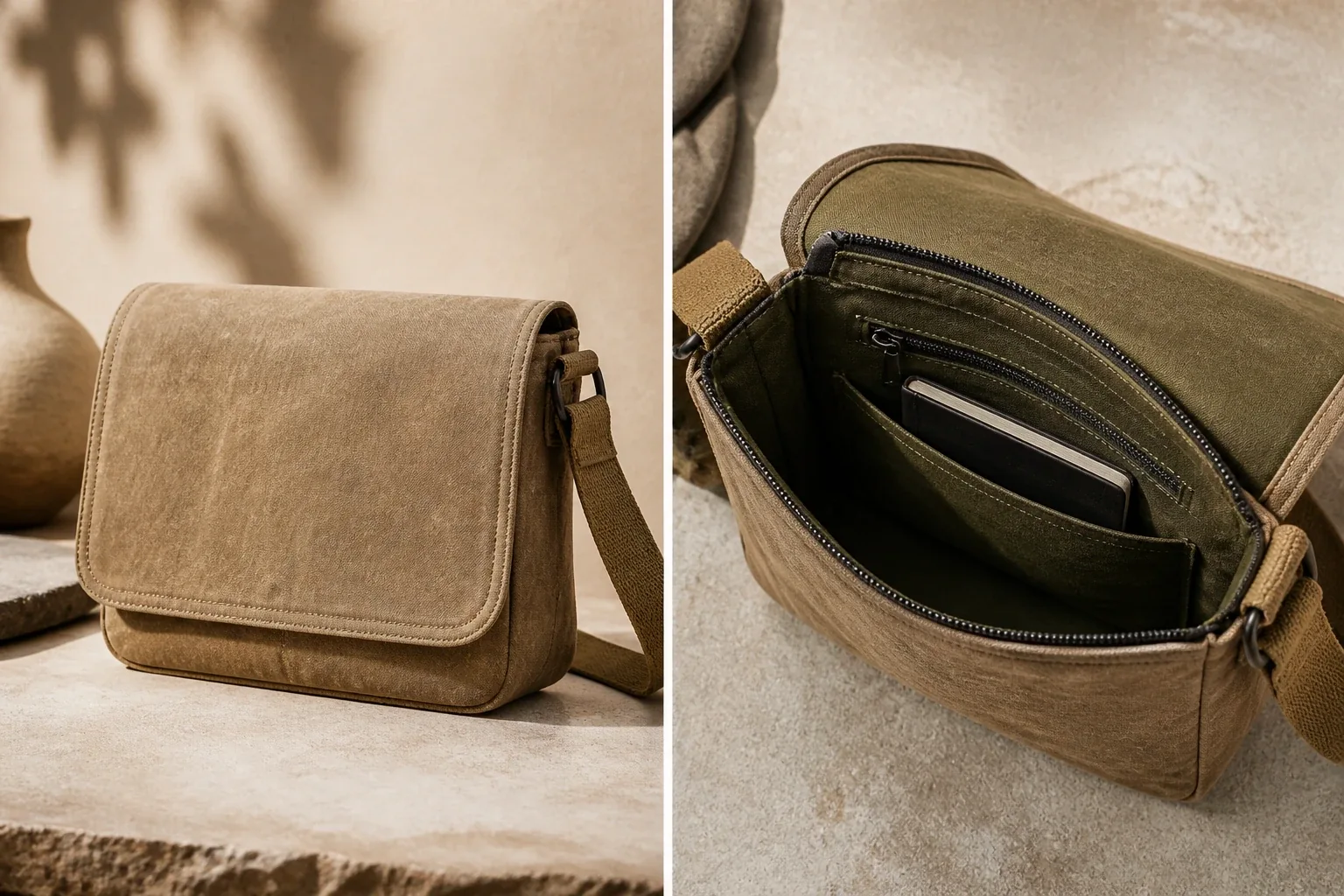
Suppose a bag is 26 cm wide outside but its zipper opens to 21 cm, and a hard notebook is 23 cm wide. A larger outside width does not establish that the notebook slides through the opening straight. Mark the clear opening, then pack and close the actual bag. Note flexibility where it affects fit.
Make the caption precise
A clasp macro shows construction, not chain length. A lit-room study shows atmosphere, not a pendant's diameter. Give the measured quantity and unit beside the exact SKU so the shopper can make their own comparison.