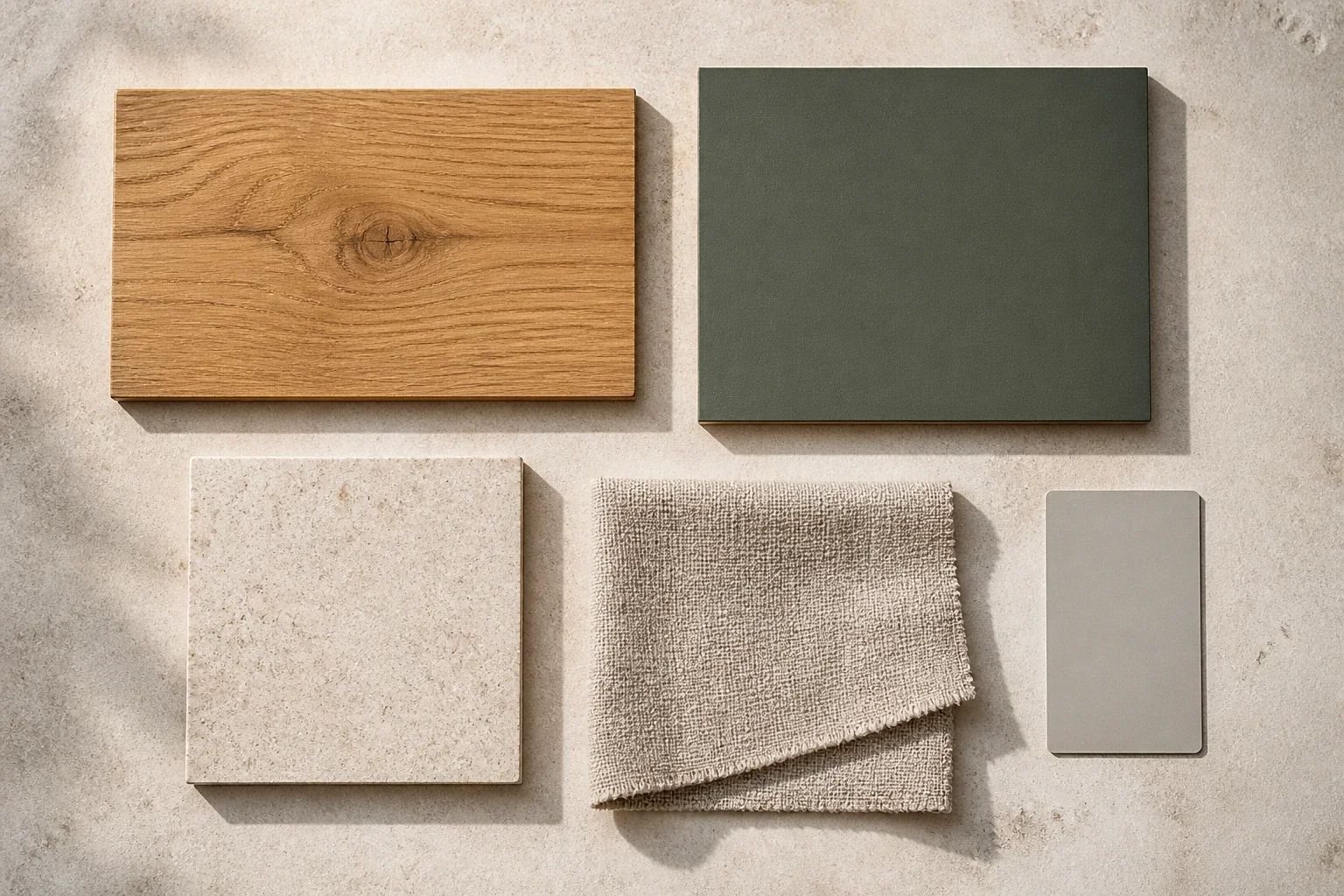
Build an interior finish board a client can approve by sample
Separate floor, wall, stone and textile samples. Record the actual sample ID, intended use and finish for each. The board explains the combination; purchasing refers to physical samples and supplier codes.
Show three relationships
Separate wall, floor and furnishing materials, document which surfaces meet, and then show grain direction, scale and sheen. A folded edge can show textile drape. Keep wood grain and important edges in view.
Verify color with the sample
Displays, camera white balance and lighting affect appearance. Match the illustrative board to physical sample IDs and verify at the project. Keep IDs stable when rearranging the proposal so procurement can trace each revision.
Starting materials
Gather material photos, supplier and sample IDs, intended locations and a neutral reference.
Example prompt
Arrange oak, sage coating, pale stone and linen in separate areas. Retain edges and grain direction, use consistent lighting and reserve space for IDs and intended locations.
What to check
Ask the client to point to the precise sample. Record the code, finish and approval date. Compare similar colors with different sheen in actual light.