
What a folded paper dummy can tell you before printing
Six panels of a theatre programme look neat on screen. The booking number may still end up inside the last fold.
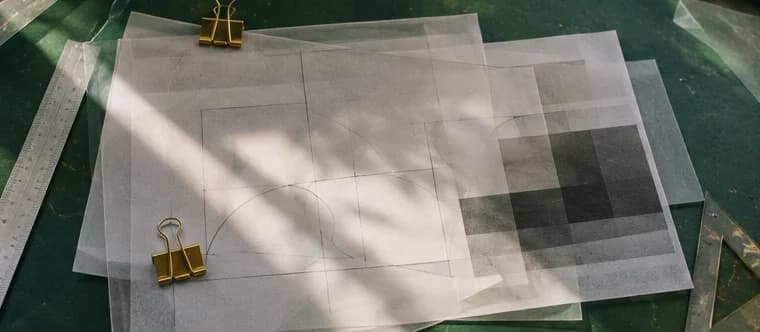
Mark a blank dummy
Fold a blank sheet using the intended pattern. Write what a visitor needs on the cover, at first opening and fully open. Unfold and photograph the panel order. An accordion and a roll fold reveal different sequences.
Write “picked up at counter” on the outside and “booking number to take away” on the back. Open the dummy naturally. Number each newly visible face in pencil and add the question it answers: what is on tonight, how to choose a show, how to leave. Unfold it and mark the top edge and sides. Pair this photograph with the folded view so nobody infers left-to-right artwork order from six numbers.
Inspect the fold lines
Circle prices, phone numbers and QR codes. Move critical details off the fold and faces away from a crease. Confirm bleed, stock and inner panel width with the printer using their production specification.
The back may be a good location for a telephone number until the counter holder covers its bottom edge. Label the QR destination and try scanning with the actual fold held in one hand. Crease a proof of the spread and look at the face from different angles. If one panel falls into shadow and changes the expression, move the face onto one plane and leave the fold to clothing or scenery.
Rehearse at the ticket counter
Ask one person to find tonight’s performance and another to unfold the transit map. Record their first move and revise the cover cue if both open the wrong panel. Deliver the dummy photo with the approved flat artwork.
Mark the revision and fold on the proof. Ask one visitor to find Friday evening while holding it in one hand; ask another to locate the accessible entrance with the sheet flat. Record how many times each opened it, which panel made them pause and the last line they read. Keep a working schedule group if only the map failed. Repair the map orientation and entrance note first.
Make the approved sequence reproducible
Request the printer’s dimensioned layout for the chosen fold. Confirm which panel must narrow and which marks are trim lines. Identify the finishing artwork separately and agree which guides to suppress on output. Send photographs of both faces of the dummy and the folding sequence. Ask the approver to follow the returned proof from cover to map, read the whole number and scan the link before recording the approved flat filename.