
Find the missing step in an illustrated instruction
Fold a paper envelope from pictures alone and “bring both corners in” suddenly needs a direction, a target and a starting face.
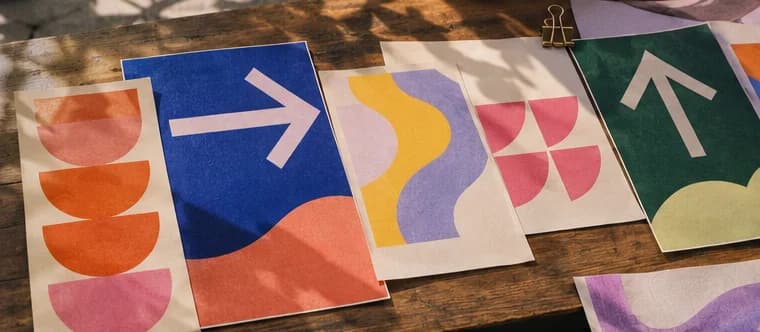
Keep the paper oriented
Use two-colour paper and photograph it from above. Begin every panel where the previous one ended. Give turning the paper over its own frame so a sudden colour change does not imply a missing fold.
Use two identical two-colour sheets. Finish one envelope as the goal image and stop the other when the pocket appears. Mark the tripod position and upper paper edge with removable tape. Shoot the untouched state, midpoint and completed fold. Compare edges: if a left-facing corner suddenly points right, identify when the sheet turned. Record that movement or reshoot with a continuous orientation.
Give the arrow a destination
Compare before and after frames to locate the moving edge. Draw from that edge to its alignment point. Distinguish crease marks from paper boundaries and draw a small outline if fingers obscure the endpoint.
Take “turn over, then bring the right corner to the centre line”. Jumping from the blue face to an already folded corner hides two decisions. Show fingers turning the upper edge to expose white, the corner travelling to centre, then contact before pressing. Use a curved arrow over the edge for the turn, a flat arrow for travel and dots at matching points. Check in greyscale; a corner mark should identify the face even without colour.
Test on a fresh sheet
Watch a first-time folder without coaching. Note pauses and reversed folds. If the flap gets sealed in step three, label the temporary hold there. Repeat the corrected instructions from the beginning.
At a pause note the panel, the part being held and the shape inherited from the previous panel. If someone reaches into the pocket instead of lifting the outer corner, add a side inset showing the pocket remains empty. Give the next tester a postcard to insert and remove. An envelope that looks right but is sealed too early tells you exactly which temporary hold needs a new frame.
Check the single-card version
If panels become phone cards, retain a miniature starting state and step number. On the hold-and-turn card, readers must be able to identify the face they should see. Highlight the moving corner when adjacent creases look alike.